Something Creaks on the Third Landing: In Praise of the Hotel Ghost
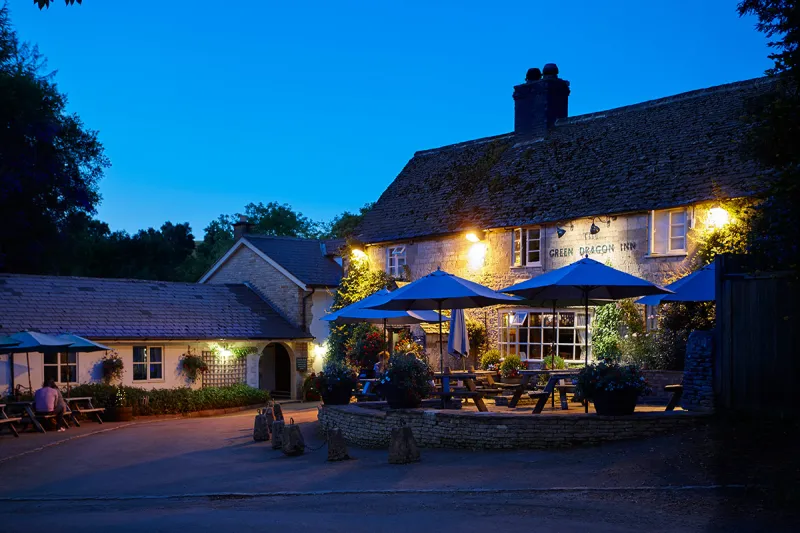
Photo: Michael Gaylard from Horsham, UK, CC BY 4.0, via Wikimedia Commons
Every hotel has a story about the ghost. The good ones tell it loudly. The great ones tell it reluctantly, after the second round, as though they're doing you a favour by confirming it.
At a certain sort of establishment — old, independent, slightly wonky in the way that money can't buy and refurbishment can't remove — the ghost is not a gimmick. It's a member of staff. Long-serving, unpaid, and frankly better at word-of-mouth than any marketing agency you could hire.
The Economics of a Good Haunting
Consider what a ghost actually does for a hotel. A spa requires a capital outlay, a towel budget, and a therapist named Kayleigh. A ghost requires only a death, a building, and the patience to let the story simmer for a century or two.
Better still, the ghost is the one amenity that cannot be replicated by the competition. Premier Inn can match your mattress. Every hotel in the land has a Nespresso machine now. But nobody can steal your spectral maid who allegedly drowned in 1874 and has been fussing about the linen ever since. She's yours. She comes with the freehold.
This is why the chains have tried and failed to manufacture atmosphere. You cannot install a haunting the way you install a rainforest shower. Guests can smell the difference between a ghost and a gimmick, in the same way they can smell the difference between a full English and a hotel breakfast that's given up.
A Field Guide to the Resident Spectre
Not all hotel ghosts are created equal. The taxonomy, as any night porter will tell you, runs roughly as follows.
The Regretful Landlady. Died in the building she ran, and has simply never stopped running it. Reported tucking in guests' blankets and straightening pictures. The best kind — essentially free housekeeping with a centuries-long work ethic.
The Jilted Bride. Walks corridors in wedding attire, weeping softly. Enormously popular with ghost-hunting tour groups, mildly alarming at 3am when you've just gone to the loo. Every county has at least one; some hotels have been accused of sharing, which is considered very poor form in the spectral community.
The Soldier. Usually Civil War, occasionally Napoleonic, always heard rather than seen. Heavy boots on the stairs, a door that won't latch. Perfect for hotels built on old routes between garrison towns.
The Cat. Small, unbothered, occasionally sits on the end of the bed. Statistically the most reported ghost in Britain and the least frightening. If your hotel's ghost is a cat, lean into it. Sell the room as the Cat Room. People will book it.
How a Rumour Is Born
Here's the honest bit: plenty of hotel ghosts started life as nothing more sinister than a slow Tuesday. A guest asks the owner, over a nightcap, whether the place is haunted. The owner — who knows a gift when it's handed to them on a silver salver — pauses a beat too long and says, "Well... there have been things."
That's it. That's the whole machinery. One pause, one ellipsis, and within a decade the story has a name, a date, and a preferred staircase. Ghosts, like reputations, are built on almost nothing at all.
We would never suggest a hotel invent one outright. But we would note that the Odd Fellows — the fraternal brotherhood from whom certain boutique establishments take their name — were themselves a society built on secrecy, handshakes and meeting behind closed doors. If anyone in the hospitality world has the heritage to justify a mysterious presence on the premises, it's us. We choose to find the ambiguity very useful.
Why Guests Want the Creep
There's a reason ghost stories sell rooms, and it's the same reason people ask for the corner table. Modern travellers have had enough of seamless. A hotel that's too smooth feels like an airport lounge with beds in it.
A creaking third landing, a door that swings shut on its own, a portrait whose eyes follow you to the kettle — these are not defects. They're character. They're the story you tell at work on Monday, the reason you booked again, the thing that separates a room you slept in from a room you remembered.
The best ghost stories also do something quietly clever: they lower expectations. A guest warned the room is haunted will forgive a wobbly wardrobe and a temperamental radiator, because wobbliness is now part of the experience. The ghost is doing crisis management as well as entertainment. Show us the spa that can do that.
Sleep Tight (Or Try To)
So here's our position, stated plainly. A hotel without a ghost, or at minimum a rumour of one, is a hotel missing a trick. The building doesn't need to be genuinely haunted — though after a few centuries, most British buildings have earned the benefit of the doubt. It needs only to have lived long enough, and been loved badly enough, that a story could plausibly have taken root.
Book the old place over the new one. Take the room at the top of the crooked stairs. If the wardrobe door swings open at midnight, don't ring reception.
That's just the staff. They've been here longer than you have.