Secret Handshakes and Flock Wallpaper: What the Odd Fellows Ever Did for Us
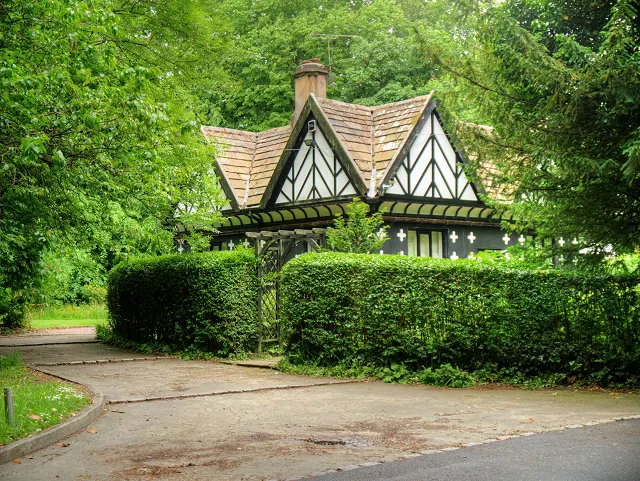
Photo: David Dixon , CC BY-SA 2.0, via Wikimedia Commons
Every hotel has a story, apparently. Most of them involve a visionary founder, a repurposed grain silo, and a commitment to 'authentic experiences'. Ours involves secret handshakes, mutual aid, and quite possibly the finest flock wallpaper in Cheshire. We'll let you decide which is more interesting.
Who Were the Odd Fellows, Then?
Long before anyone thought of charging £180 a night for a room with a clawfoot bath, the Odd Fellows were a friendly society — essentially a trade union for people whose trade was simply being alive and hoping for the best. Founded on principles of 'visit the sick, relieve the distress, bury the dead and educate the orphan', they were the Victorian equivalent of an all-inclusive insurance policy, minus the hold music.
Why 'Odd'? The most popular theory is that they were formed by men from odd trades — fellows who didn't fit neatly into the established guilds of butchers, bakers or candlestick makers. In other words, the original oddballs. We like to think we've honoured that spirit, though our members these days are more likely to be odd in the sense of ordering a negroni at 11am.
Lodges, Regalia and Rather Good Buildings
By the 19th century, the Odd Fellows had hundreds of thousands of members across Britain, and they needed somewhere to meet. The answer: lodges. Not the rustic log cabin kind — think ornate halls with carved crests, stained glass, committee rooms and a bar that opened when the committee said so.
These weren't frivolous purchases. Working men pooled their ha'pennies to buy grand buildings, partly as a statement: we may be labourers and clerks, but we can put up a hall with a ballroom, thank you very much. The result was a scattergun of magnificent, slightly eccentric buildings across the country — many of which, like our own Chester home, spent the latter 20th century being underused, misunderstood or threatened with demolition.
The Odd Fellows' hall in Chester had all the ingredients: high ceilings, handsome bones, and a whiff of ceremonial mystery. What it lacked was anyone willing to put leopard-print velvet in the drawing room. Enter us.
From Committee Room to Cocktail Bar
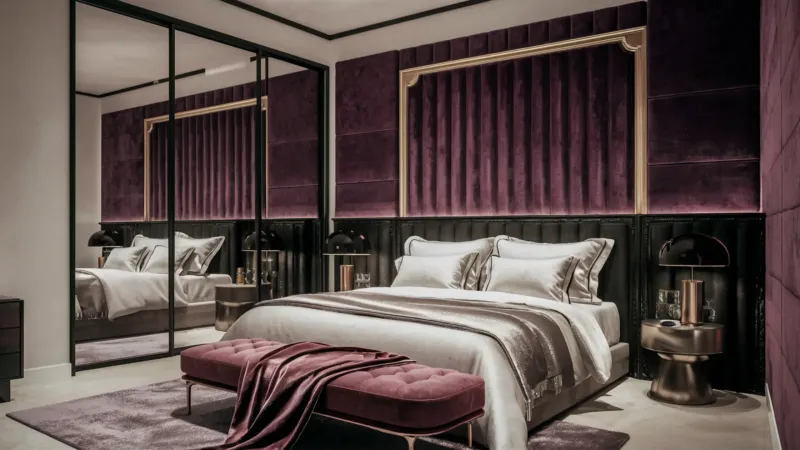
When the Oddfellows brand took over the Chester building, the logic was simple: the architecture already had more character than most hotels could buy in a decade. All we had to do was not ruin it. So the lodge became a boutique hotel, the meeting rooms became bedrooms with opinions, and the bar became the sort of place where Chester locals and lost Londoners end up comparing notes until last orders.
We kept the quirks. Odd angles, odd nooks, the odd ghost story from a member of staff who absolutely will not be drawn on specifics. In a world of hotel rooms engineered by spreadsheet, a building that evolved organically over two centuries has a certain — well, we'd say je ne sais quoi, but we're British, so let's say 'it's got a bit about it'.
Why Old Buildings Make Better Hotels
There's a reason nobody writes home about a travelodge. (Actually, people do write home about Travelodges, but rarely favourably.) A historic building gives you things no amount of interior design budget can: creaky floorboards with provenance, windows that have watched a few centuries go by, and a layout that refuses to obey the laws of modern spatial planning.
The friendly societies may have faded — membership declined, the welfare state took over the 'bury the dead and educate the orphan' side of things — but their buildings remain as monuments to a very British idea: that ordinary people deserve extraordinary rooms. We've simply carried on the tradition, minus the secret handshake. Though if you ask nicely at reception, we're not saying anything.