Leave Me Alone, I'm on Holiday: A Small Defence of the Do Not Disturb Sign
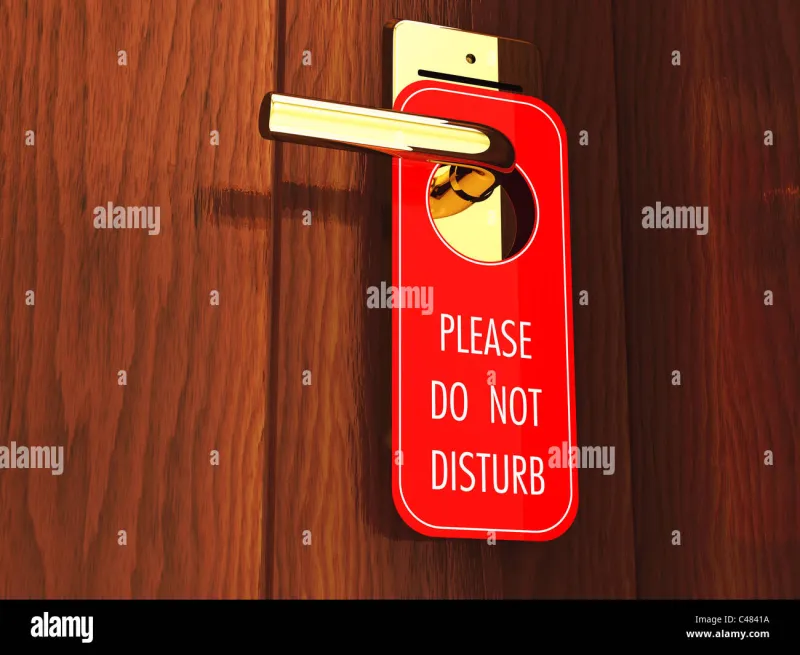
Photo: do not disturb sign hanging on hotel door handle, via c8.alamy.com
There is a moment, usually around half past four on the first afternoon of any hotel stay, when the phone buzzes. Not the phone on the bedside table — your phone, the one you brought to escape from. Hi! Just checking you're settled in! Reply YES for a welcome drink!
You have been in the building for ninety minutes. You have not yet found the light switch for the bathroom. And already the establishment wants a relationship status update.
We'd like to make a small, possibly old-fashioned argument: the greatest luxury a hotel can offer is not a pillow menu, a rainforest shower head, or even a decent G&T at a sensible price. It is being left gloriously, magnificently alone.
The Tyranny of the Follow-Up Text
Modern hospitality has developed a curious anxiety about silence. The thinking seems to go: if a guest hasn't interacted with us in three hours, something must be wrong. So out come the pings. The pre-arrival email asking about your 'vibe'. The app that wants to be your concierge, your key, and your pen pal. The cheerful knock at eleven the next morning — just seeing if you'd like fresh towels! — when what you'd actually like is for the door to remain a door.
None of this is malicious. It's hospitality done with great enthusiasm and slightly poor aim. But there's a difference between being looked after and being watched. One is a warm towel; the other is a supervisor.
In Praise of the Hanger
Which brings us to the humble Do Not Disturb sign — arguably the last honest piece of communication in the entire industry. No app, no algorithm, no small print. Just two words and a picture, saying precisely what they mean: I'm in. I'm fine. Whatever's happening behind this door is between me, the kettle, and a packet of Quavers.
It's a beautifully British instrument, really. It doesn't demand a conversation. It doesn't require an explanation. It sets a boundary with the politeness of a well-placed 'so' at the end of a sentence. The Victorians would have understood it instantly. So would your nan.
And here's the thing: a good hotel doesn't take it personally. A good hotel reads the hanger, nods sagely, and quietly leaves the extra towels outside the door like a note through a cat flap. That's not neglect — that's respect.
Privacy Is a Service, Not an Absence
There's a school of thought that says being left alone means the hotel isn't doing its job. We'd argue the opposite. Knowing when not to appear takes more skill than knowing when to. Anyone can hover. It takes real confidence to trust that the room is right, the tea tray is stocked, and the guest is perfectly capable of locating breakfast without a guided tour.
The best stays are the ones where you surface at whatever hour suits you, wander down, get looked after brilliantly, and then vanish again — no questions asked, no follow-up survey before you've checked out. You remember it not as a transaction but as a small holiday from being contactable.
Our Modest Proposal
So here's the manifesto, in three clauses:
- The hanger is binding. If it's out, we knock on nothing and text about nothing. The towels can wait. You cannot.
- No news is good news. If we haven't heard from you, we assume you're having a lovely time — because you almost certainly are.
- Hospitality means the door opens when you want it to, not when the system suggests a check-in.
Consider this our formal application to mind our own business. Hang the sign. Draw the curtains. Let the phone buzz itself into silence. The kettle's within reach, the bed's not going anywhere, and nobody — not one soul — is going to ask if you're 'settling in okay'.
You already have. Gloriously.