Put It on the Room: A Small Manifesto for the £8 Lemonade
There is a moment, roughly forty minutes into any hotel stay, when the holiday properly begins. Not at check-in. Not with the first sip of something cold. No — the true starting gun is the moment you hear yourself say the seven most luxurious words in the English language: "Can you just put it on the room?"
Nothing else signals surrender to leisure quite like it. You have stopped thinking of money as money and started thinking of it as a quantity to be reconciled, vaguely, at some future point by a person who may or may not still be you. That person is Sunday You. And Sunday You, frankly, can cope.
The Economics of Not Knowing
Here's the thing about the room charge: it doesn't make things cheaper. The £8 lemonade by the pool in Majorca is a scandal; the £4.50 lemonade in a Chester hotel bar, added to the room, is a treat. Same maths, entirely different emotional outcome. The difference is that the bar bill arrives at the end like a plot twist in a novel you've enjoyed, whereas paying cash makes you the accountant of your own happiness, and nobody goes on holiday to do bookkeeping.
The minibar operates on the same principle but with added theatre. Yes, that Kit Kat carries a markup that would embarrass a motorway services. But you're not buying chocolate — you're buying the experience of eating chocolate in a dressing gown at 11pm while deciding whether to watch a documentary about shipping containers. That's worth at least £3.50 of the £5.80.
The Checkout Interrogation
Every couple who has ever stayed in a hotel knows the ritual. The bill slides across the desk. One of you scans it like a customs officer. And then comes the sentence that has ended more relationships than infidelity:
"Did you have a Crunchie?"
The minibar Kit Kat is, without question, the great test of character in British hospitality. You will deny it. Your partner will deny it. The night porter who watched you take it on CCTV will deny it, because he has seen this play out four hundred times and knows the paperwork isn't worth it. The chocolate becomes a ghost — present on the bill, absent from memory, a small nougat-covered mystery nobody is willing to solve.
A Field Guide to Things Readers Confess to Charging
We asked around (read: eavesdropped at breakfast), and the confessions are glorious:
- The £9 glass of tap water with lemon, ordered at midnight with such conviction that the bar staff nearly saluted.
- Two desserts, one bill, one person, the second of which was "for later" and was, in fact, for later. Twenty minutes later.
- The £12 hotel umbrella, purchased in a panic, which then accompanied the buyer to Portugal the following week and back, unused.
- A birthday candle — just the candle — charged to the room for a friend's cake that never materialised.
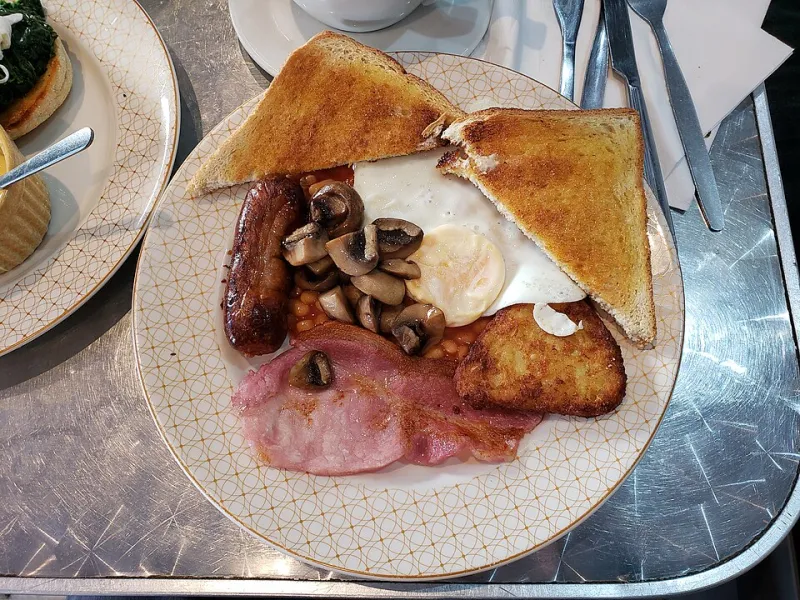
- The full English at 2pm, described on the bill as "breakfast" with a straight face.
Each of these is a tiny monument to being off-duty. Not one of them would survive contact with a spreadsheet.
In Praise of Sunday You
Some critics — accountants, mostly — will tell you to pay as you go, keep receipts, stay present. We say: the entire point of a hotel is that it's a small, flock-walled republic where normal fiscal behaviour is suspended. The room charge is the hotel's love language. It says we trust you, even as the minibar sensor quietly logs your every movement.
So next time you're hovering over a bill, doing the mental arithmetic of a person who has forgotten they're on holiday, stop. Sign the thing. Put it on the room. Let Sunday You deal with it — they're made of sterner stuff, and they had the Crunchie too.
And if you're the sort who reads the minibar price list before touching anything: we see you, we respect you, and there's probably a wobbly door handle somewhere with your name on it.